
Tourmalinated Quartz, Two Stones Growing Inside One
A quartz crystal shot through with black tourmaline needles, carrying the symbolic work of both stones simultaneously. The mineralogy behind the inclusion growth, the traditional protective meaning, and buying guidance.
At a glance.
Quick read- ChakraRoot (Muladhara), Crown (Sahasrara)
- Mohs hardness7
- Mineral familyQuartz with tourmaline inclusions
- OriginBrazil, Madagascar, United States, Russia
- ColourClear to smoky quartz with black tourmaline needles
- ElementEarth, Air
- ZodiacCapricorn, Libra
- Sits well withAmplified protection, grounded clarity
- Water safeYes
- Sun safeMostly yes, smoky varieties can fade slightly
- RarityCommon in lower grades, strong specimens uncommon
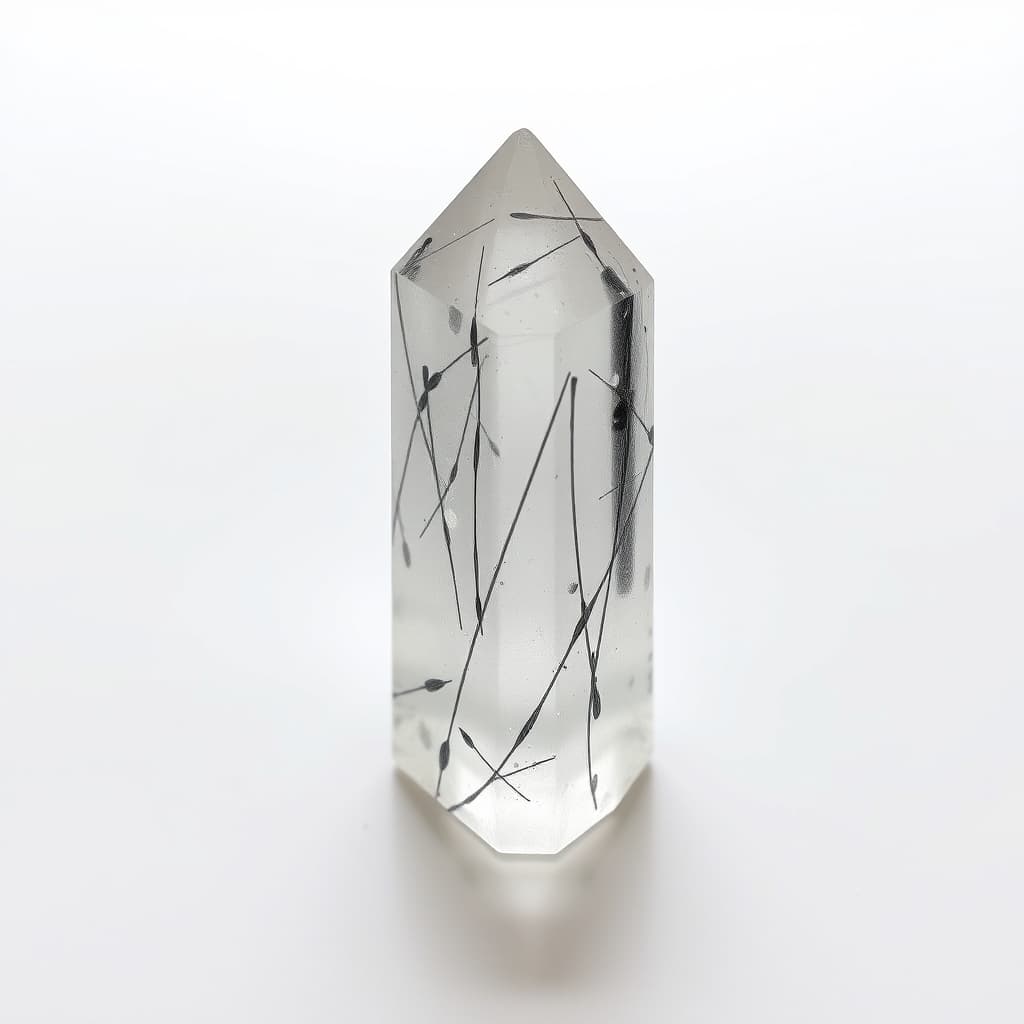
Tourmalinated quartz is one of the more honest crystals in the trade. It does exactly what its name says: clear quartz with black tourmaline needles growing through it. What makes this stone distinctive is that two recognisably different minerals occupy the same physical specimen, which carries a specific symbolic meaning in traditional practice. This guide walks through the mineralogy that produces the inclusions, the two-tradition association, and how to buy a piece where both minerals are present in useful proportion.
What is actually happening inside the stone
Tourmalinated quartz forms when two minerals crystallise in sequence at the same location. The black tourmaline (a variety called schorl) grows first, producing the characteristic needle-like prismatic crystals. Quartz then crystallises around the existing tourmaline needles, encasing them.
The result is a single specimen containing two distinct minerals: clear or smoky quartz as the host, black tourmaline needles as the inclusions. Both minerals are visible. Both are intact. Neither has replaced the other. This is different from pseudomorphic stones (like tiger's eye) where one mineral has chemically replaced another.
The needles can run anywhere from thin hair-like lines (often called "hair tourmaline") to thick dense prisms that dominate the specimen. Both are valued, for different reasons.
The two traditions overlaid
Tourmalinated quartz carries the full traditional meaning of both its component minerals.
From clear quartz, it inherits the oldest amplification tradition in the practice. Quartz makes whatever it is paired with more present, more focused, more available.
From black tourmaline, it inherits the protective grounding tradition that spans Hindu, European, and Indigenous American practice. Tourmaline is one of the oldest documented protective stones.
The combination is the protective work of tourmaline, amplified by the quartz it grew inside. This is why some traditional sources consider tourmalinated quartz more effective for protective work than either stone alone. The classical pairing of clear quartz plus black tourmaline, which you would normally place side by side on a shelf, has grown into a single specimen. The pairing is already complete.
Why this particular combination matters
Three reasons traditional sources give tourmalinated quartz a special place.
The amplification is directed. Normally clear quartz amplifies whatever it is near, which can scatter. In tourmalinated quartz, the quartz is permanently paired with black tourmaline. The amplification cannot drift onto something else.
The protection becomes visible. Black tourmaline alone is a solid opaque stone. Its protective work is felt but not seen. In tourmalinated quartz, you can see the tourmaline through the clear matrix. This visibility has mattered in practice; being able to see the protective element is a small but real psychological help.
The two chakras pair naturally. Clear quartz carries crown chakra (Sahasrara) associations. Black tourmaline carries root chakra (Muladhara) associations. A single stone spanning both creates an unusual vertical axis that most single crystals do not offer.
Variations
Three specimen types worth knowing.
Thin-needle (hair tourmaline quartz). The tourmaline appears as fine black lines throughout a mostly clear quartz matrix. Visually elegant. The most common grade in jewellery.
Dense-needle. Thick black tourmaline prisms dominate, with the quartz acting as a clear or smoky host. More dramatic, considered more potent by some traditional sources.
Star formations. Occasional specimens show tourmaline needles radiating from a central point in a starburst pattern. These are rare and command high prices.
| Variety | Needle density | Visual effect | Traditional use |
|---|---|---|---|
| Thin-needle | Sparse, hair-fine | Clear with black lines | Everyday wear, gentle work |
| Dense-needle | Heavy, thick prisms | Black dominant | Intensive protective work |
| Star formation | Radiating pattern | Dramatic focal point | Altar pieces, rare |
Living with a piece
Four approaches that fit this stone.
By the front door. The traditional placement for protective stones, amplified by the built-in quartz. A single tumbled piece on a small shelf or in a bowl near the entrance.
In jewellery for anxious periods. A pendant or bracelet with tourmalinated quartz carries the protection through daily life, which is particularly useful during grief, transition, or high-conflict periods.
On a meditation or journaling spot. The vertical axis (root and crown both addressed) makes this stone unusually suited to sitting practice. Place on a cushion or small cloth during the session.
Paired with selenite for cleansing. Tourmaline absorbs heavy energy in the traditional reading. Selenite placed beside the tourmalinated quartz keeps it reset without requiring other cleansing work. A simple two-stone maintenance system.
Caring for tourmalinated quartz
Three notes.
It is durable. Hardness 7 on both the quartz and tourmaline components means it handles daily life well. Safe for jewellery, safe in a pocket.
It is water-safe. Rinse under cool water for brief cleansing. No need to avoid moisture.
It is mostly sun-stable. Pure clear tourmalinated quartz handles sun fine. Smoky tourmalinated varieties can fade slightly after long direct sun exposure, so moonlight or smoke are better long-term cleansing methods for those.
Buying with clear eyes
Four honest checks.
Confirm the needles are tourmaline, not hematite or actinolite. Tourmaline needles have a distinctive prismatic form (long, often triangular in cross-section). Hematite inclusions are plate-like and sometimes silvery. Actinolite is usually greener and softer.
Look at the needle quality. Dense sharp black needles indicate well-formed tourmaline. Dull or fragmented-looking needles suggest poorer specimen quality. The needles should look like they have character, not like cracks.
Check for intact clarity. The quartz matrix should be transparent or only slightly smoky. Cloudy, milky, or heavily fractured quartz with tourmaline inclusions is technically tourmalinated quartz but is less prized.
Avoid painted fakes. Rarely, low-quality clear quartz is sold with painted-on black lines mimicking tourmaline. Real inclusions are three-dimensional; you can see them from multiple angles and they have visible thickness inside the stone. Painted fakes are flat and appear only on one face.
Pairings
Tourmalinated quartz works with several other stones in traditional practice.
- Tourmalinated quartz and selenite. The self-maintaining pairing mentioned above. Selenite cleanses; the quartz amplifies the already-grounded protection.
- Tourmalinated quartz and amethyst. The protective quality combines with amethyst's mental settling for anxious sleep. Placed together on a bedside table.
- Tourmalinated quartz and hematite. Double grounding. Used during particularly unstable periods when standard tourmaline alone is not quite enough.
A closing thought
Tourmalinated quartz is one of the more satisfying crystals to understand because its symbolism matches its visible structure so clearly. You can see the two traditions inside the stone. The quartz that amplifies. The tourmaline that protects. Both visible at the same time. If you want a single crystal that carries both the protective and the amplifying traditions without needing a pairing, tourmalinated quartz is the one.
For the individual traditions that come together here, see our clear quartz guide and black tourmaline guide. For how pairings work in general practice, see our pairings guide.
A few honest questions.
What are the black lines inside tourmalinated quartz?
They are natural black tourmaline (schorl) crystals that grew inside clear quartz during formation. The tourmaline formed first, then quartz crystallised around it, trapping the needles in place. The result is two distinct minerals growing as one specimen.
Is tourmalinated quartz the same as rutilated quartz?
No. Rutilated quartz has titanium oxide (rutile) needles, usually gold or reddish. Tourmalinated quartz has black tourmaline needles. Both are included quartz varieties but with different minerals inside and different symbolic associations.
What does tourmalinated quartz do that plain tourmaline does not?
Clear quartz traditionally amplifies whatever it is paired with. Tourmalinated quartz has the amplification built in: the quartz amplifies the black tourmaline simultaneously. This is why some sources consider it more potent for protective work than either stone alone.
Is the black material inside always tourmaline?
Usually yes when sold as tourmalinated quartz, but some pieces marketed this way are actually quartz with black hematite or actinolite inclusions. Ask the seller or check the hardness: tourmaline inclusions are hardness 7 to 7.5 and cannot be scratched.
Is it durable enough for daily wear?
Yes. The quartz matrix is hardness 7 on the Mohs scale, and the tourmaline inclusions are at least as hard. It handles daily wear as jewellery or pocket stone without issues.
Keep reading.
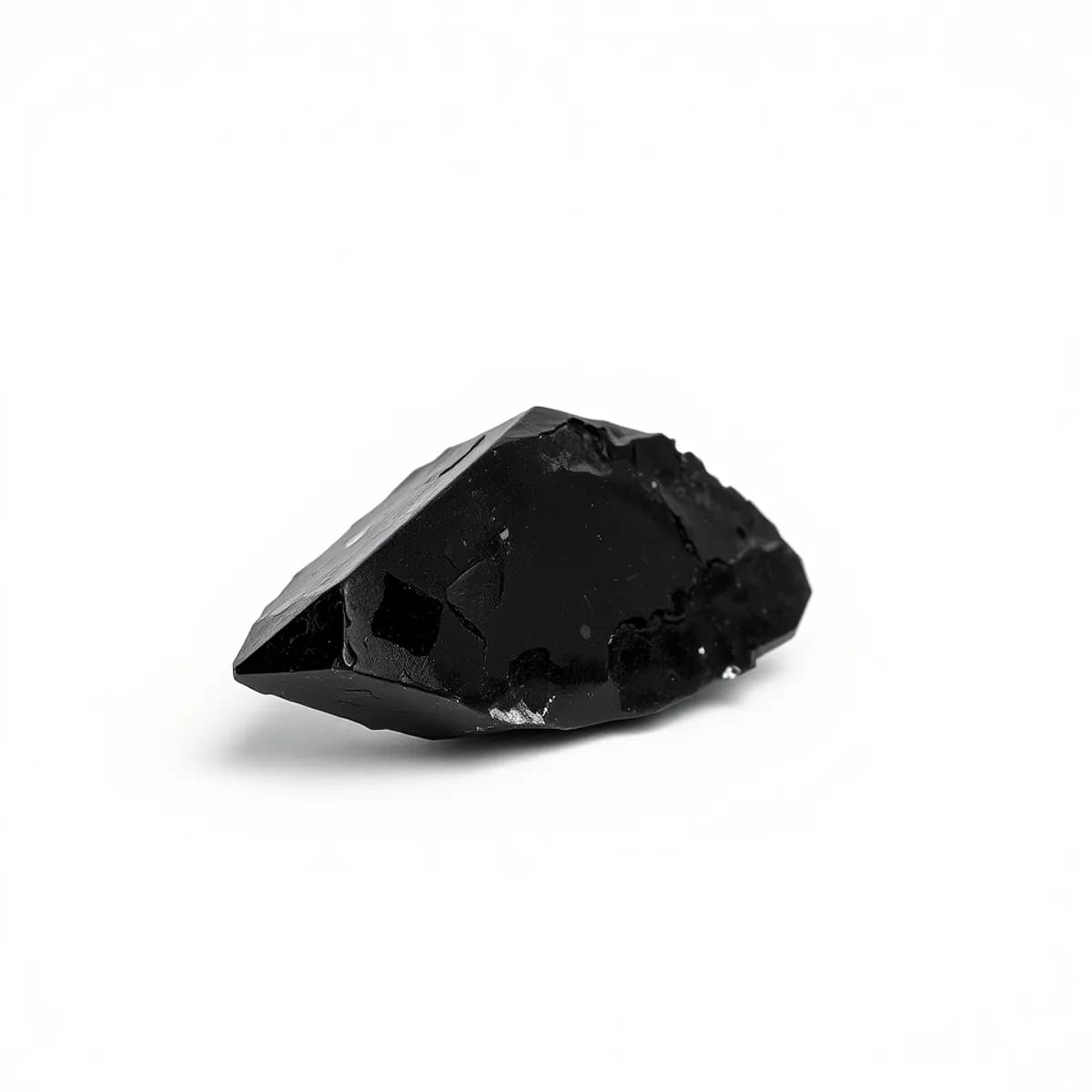
Black Tourmaline, the Stone People Ask For When Life Is Loud
The protective stone in almost every tradition that touches black stones. A look at what tourmaline actually is, why practitioners recommend it for overwhelm, and how to tell polished tourmaline from dyed obsidian.
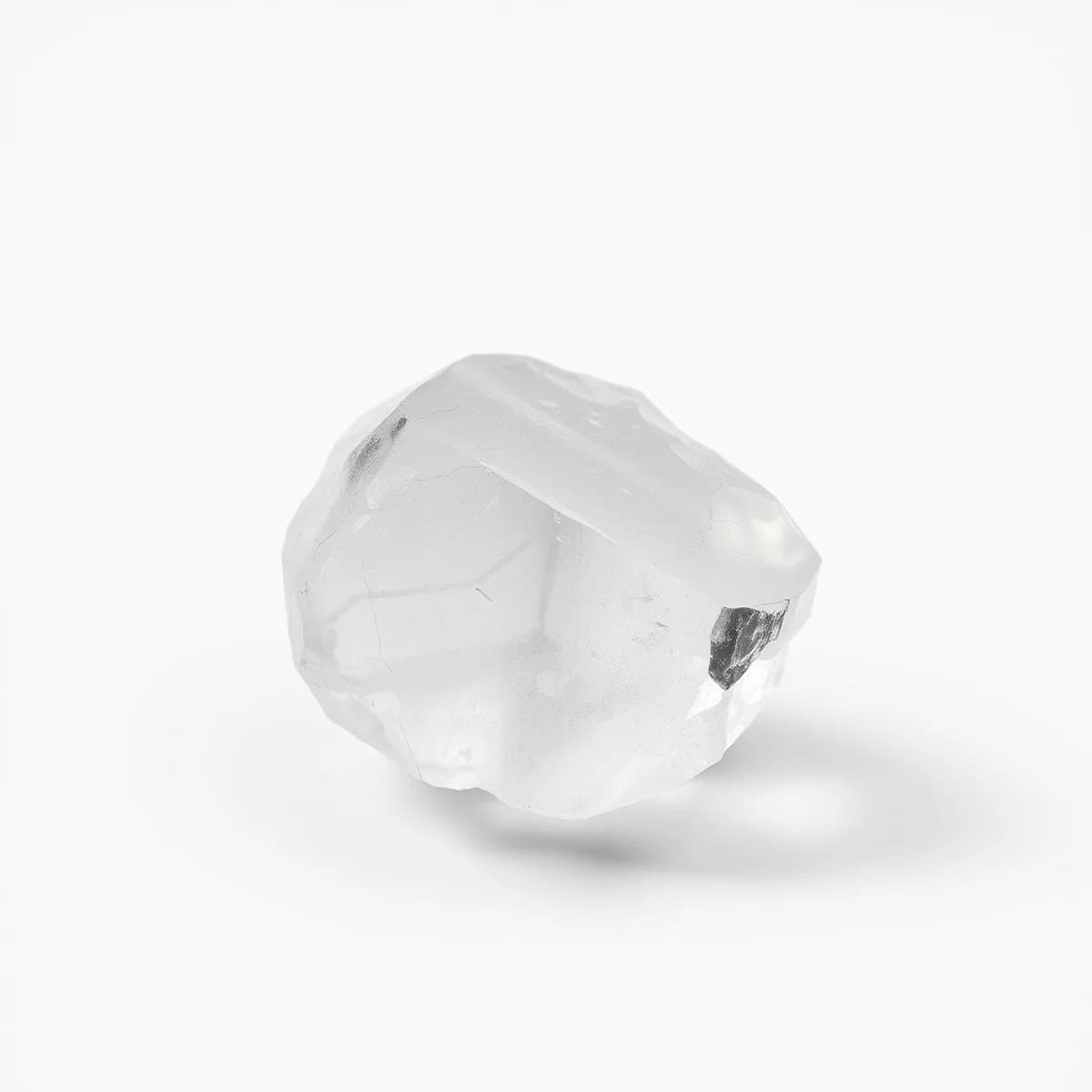
Clear Quartz, the One That Does a Bit of Everything
Called the master healer in tradition and used in nearly every radio and watch in the twentieth century. A look at what clear quartz actually is, how it earned its reputation, and why it gets recommended for almost everything.
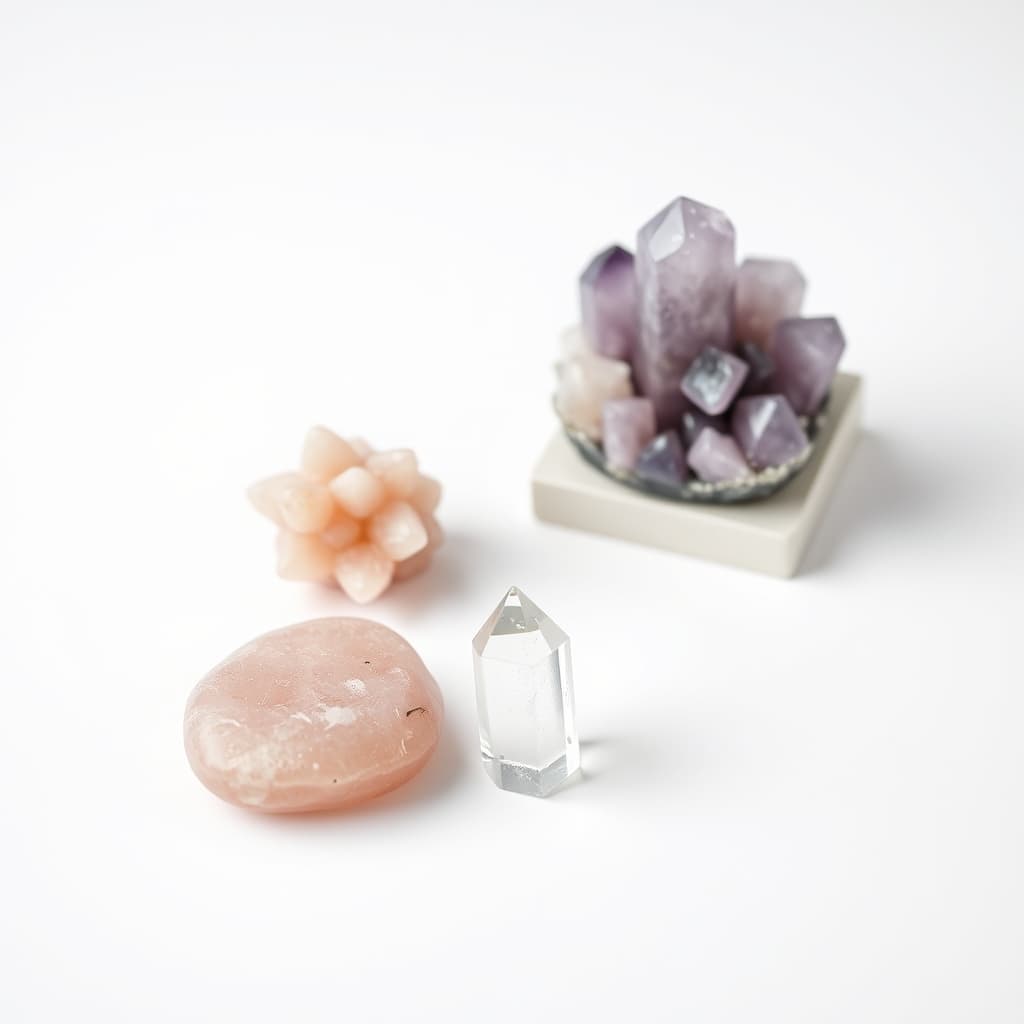
Crystal Pairings That Actually Work, a Traditional Field Guide
The combinations that show up across centuries of crystal practice and why they work together. Twelve pairings explained honestly, without the forced symbolism that makes most pairing guides feel invented.
Mentioned in
Sit with us on Sundays.
One quiet letter every week. New writing, a crystal to consider, and whatever we have been thinking about. No tracking pixels, no affiliate noise.
By subscribing you agree to receive weekly emails from AU Crystals. Unsubscribe anytime. See our privacy note.