
Crystals for Love and Relationships, Traditional Companions
The stones paired with love across Hellenistic, Vedic, and European folk sources, and what each one actually supports. Written for self-compassion and relational work, not romantic manifestation.
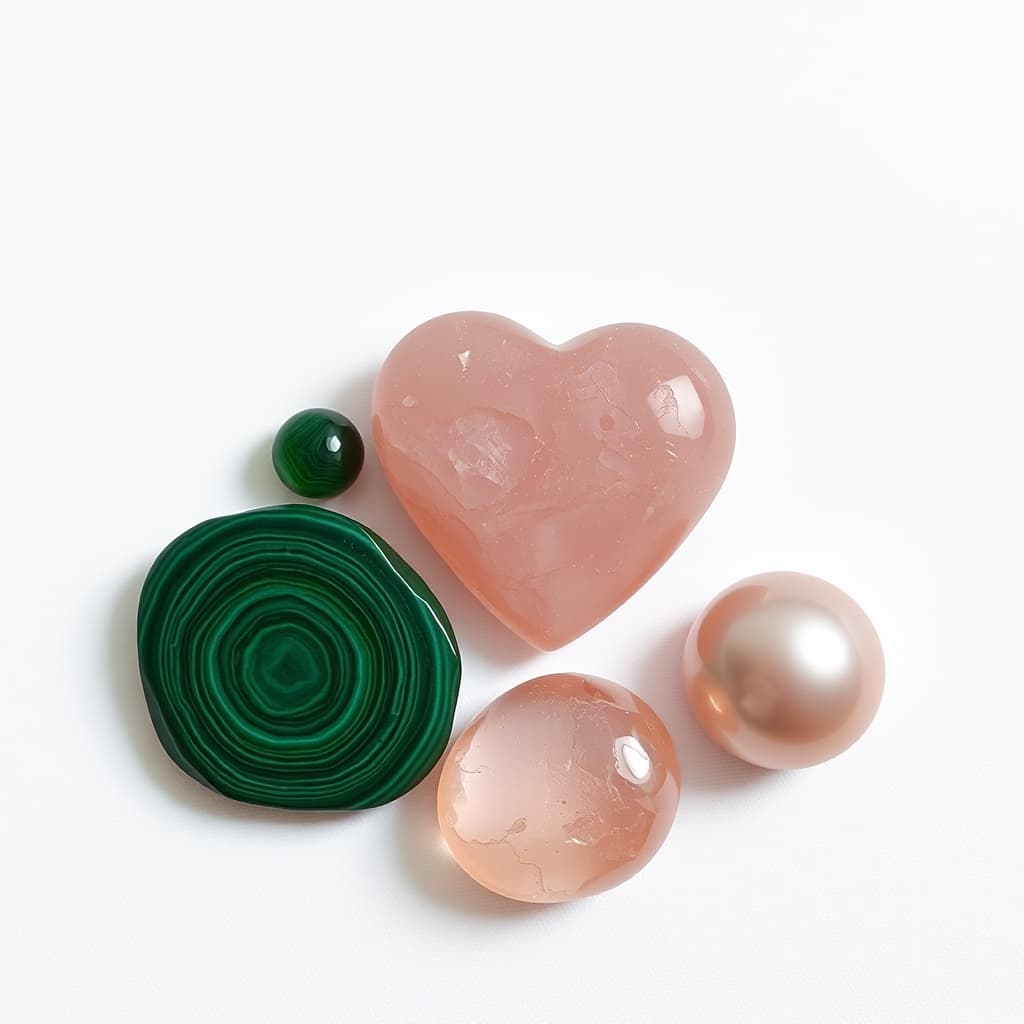
At a glance.
Quick read- ChakraHeart (Anahata), Throat (Vishuddha)
- Mohs hardnessn/a
- Mineral familyHeart practice
- OriginHellenistic, Vedic, European folk
- ColourPink, green, rose-gold
- ElementWater, Air
- ZodiacTaurus, Libra, Cancer
- Sits well withSelf-compassion, relational work, grief-informed love
- Water safen/a
- Sun safen/a
- RarityPractice
Love is not one thing. Traditional crystal practice recognised at least three distinct kinds of love-work, and paired different stones with each. Self-compassion (love directed toward yourself), established relational work (ongoing love with people already in your life), and new-relationship formation (openness to connection that has not yet arrived). Most contemporary guides collapse all three into "attracting love," which flattens the tradition and produces disappointment. This guide separates the three, names the six stones that show up consistently across classical sources, and offers a considered practice for each.
The three kinds of love-work
Before the stones, the categories.
Self-compassion. The love-work the traditional sources actually foreground. Being kind to yourself during difficulty, forgiving your own failures, holding yourself through grief or transition. This is where the crystal tradition begins, not where it ends.
Established relational work. The ongoing practice of love with people already present in your life: partners, family, close friends. This kind of love-work is primarily about communication, patience, and the capacity to keep showing up through difficulty.
New-relationship openness. The willingness to let new connections form when and if they arrive. This is distinct from manifestation-style "attracting a partner." The older practice is about internal readiness, not external influence.
Each category has its own classical stones.
The six traditional stones
1. Rose quartz
Rose quartz is the primary stone across every love-work tradition that has ever mentioned crystal pairings. Hellenistic, Indian, and European folk sources all use it, specifically for self-compassion rather than romantic love. The Venus-heart tradition is the deepest lineage.
Primary use: self-compassion, grief, sustained kindness toward yourself during hard periods.
Placement: in a pocket during difficult weeks, on a bedside table at all times, or held during journaling.
2. Green aventurine
Green aventurine is the traditional relational luck stone in English folk practice, associated with gentle growth in ongoing relationships. It also carries the new-relationship openness association because of its green earth-element quality.
Primary use: sustained relational work, openness to new connections.
Placement: in the home's common spaces (living room, kitchen), where relational life happens.
3. Malachite
Malachite is the transformation stone in the love-work set. It belongs specifically in relational phases where active change is needed rather than gentle maintenance. The stone has a reputation for surfacing what has been avoided, which can be difficult but necessary in relationships that have stalled.
Primary use: deep relational work, difficult honesty phases, transitions into or out of commitments.
Placement: during specific sessions, not continuous. Reserve for the work itself.
4. Moonstone
Moonstone is included for the cyclical aspect of relationships. Its lunar association fits the traditional understanding that love has waxing and waning phases rather than being constant. The stone supports patience through the quieter seasons of a long relationship.
Primary use: long-term relational practice, acceptance of relational cycles.
Placement: on a nightstand shared with a partner, or during couples meditation work.
5. Amazonite
Amazonite is the throat-chakra love-work stone. Honest communication is the practical infrastructure of sustained relationship, and amazonite supports the specific kind of calm, honest speech that difficult conversations require.
Primary use: relational communication, conflict resolution, post-argument repair.
Placement: by the kitchen table where difficult conversations tend to happen, or held before a hard conversation.
6. Rhodonite
Rhodonite (when included, slightly less common in starter collections) is the traditional grief-love stone. Specifically, it addresses the love that persists through loss, whether that is loss through death, through separation, or through change.
Primary use: grief-informed love, forgiveness work, reconciliation.
Placement: during grief practice, on a memorial altar, or during forgiveness meditation.
A comparison table
| Stone | Love type | When to use |
|---|---|---|
| Rose quartz | Self-compassion | Always the default, daily carry |
| Green aventurine | New connection, gentle relational | New social seasons, openness work |
| Malachite | Deep transformation | Specific sessions only |
| Moonstone | Long-term cycles | Established partnerships |
| Amazonite | Communication | Before hard conversations |
| Rhodonite | Grief, forgiveness | Loss and reconciliation work |
A thirty-day self-compassion practice
If you work with only one of these, make it self-compassion. The traditional sources are explicit: compassion for others begins with compassion for yourself.
Here is the simplest version of the practice.
Morning
Hold a rose quartz piece for thirty seconds. Say aloud, softly: I am allowed to be imperfect today.
Difficult moments
When you notice self-criticism during the day, touch the stone (or remember it if it is not with you) and say the same sentence silently: I am allowed to be imperfect today.
Evening
Hold the stone again. Review one moment when you were gentle with yourself, and one moment when you were not. Note both without further judgment.
Thirty days of this produces a noticeable shift. The practice is simple enough that you can actually do it, and profound enough that most people who commit to it are surprised by the result. This is the foundation the tradition considers prerequisite for any outward love-work.
A practice for established relationships
If you are in an ongoing relationship (romantic, family, close friendship), four practical applications.
Amazonite before hard conversations. Hold a piece for a minute before initiating. The physical act of doing this slows you down enough to enter the conversation with clearer phrasing.
Green aventurine in shared spaces. A small piece in the kitchen or living room. Not a focus; just a presence. Over months, it becomes part of the relational environment.
Moonstone during quieter seasons. Long relationships have periods of less intensity. Moonstone's cyclical tradition supports accepting these without worrying that the relationship is dying.
Malachite only during real transitions. When something is changing or needs to change. A specific piece brought out during those sessions, put away afterwards.
What to avoid
Four traps in love-work crystal practice.
Targeting other people. Traditional practice focuses inward. Crystals that claim to influence someone else's feelings are outside the older tradition and often feel coercive.
Substituting for communication. A bowl of rose quartz in the kitchen does not replace the difficult conversation. The stones support the work; they do not do it.
Romantic manifestation before self-compassion. The tradition is insistent: self-compassion comes first. Single people doing love-work usually benefit more from rose quartz for self-compassion than from aventurine for attraction.
Expecting instant relational transformation. Love-work is thirty days minimum for self-compassion, and often months or years for established relational shifts. Short timelines produce disappointment.
A closing thought
The oldest meaning of love-work in the tradition is simple and achievable. Sit with rose quartz, practice self-compassion, speak honestly to people already in your life. The crystals support these practices, they do not replace them. A considered thirty-day practice with a single stone does more than a shelf of love-themed crystals kept decoratively.
For the primary stone, see rose quartz. For the transformative pair, see malachite. For broader heart-chakra context, see our chakra master guide.
A few honest questions.
Can a crystal make someone love me?
No. No crystal causes another person to feel anything. What traditional love-work crystals support is your own capacity for compassion (including toward yourself), your clarity during relational difficulty, and your honest speech with others. These are about your inner state, which affects how you show up in relationships, not magical influence over someone else.
What if I am single and want a partner?
Traditional love-work for single people focuses on self-compassion (rose quartz) and openness to connection (green aventurine). The older practice does not promise to deliver a partner; it supports the internal state from which healthy partnerships can form.
Which crystal for a rocky relationship?
Malachite for deep transformation work when real change is needed. Rose quartz for the sustained self-compassion the process requires. Amazonite for the honest conversations that rocky phases demand. Not one stone; a considered set of three.
Is it okay to use crystals for a crush?
The traditional practice would focus the work on you, not on the other person. Sit with rose quartz to understand what you actually want and to remain grounded if the feelings are not returned. That is different from trying to magically influence them, which the older tradition explicitly warns against.
Keep reading.
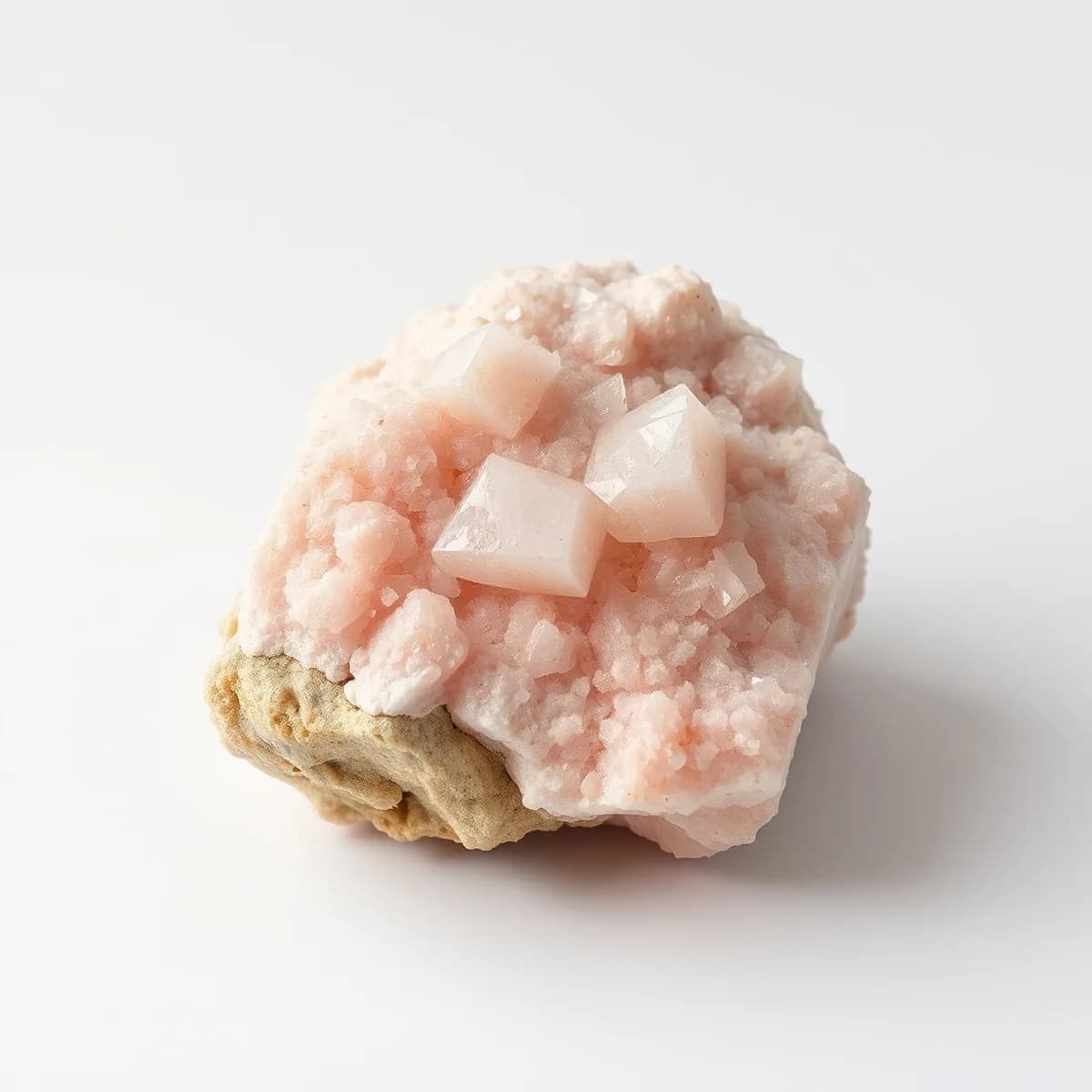
Rose Quartz, Honestly
Most of what gets written about rose quartz is a bit breathless. Here is a quieter guide, with the geology, the tradition, and a few honest notes on what crystal skincare can and cannot do.
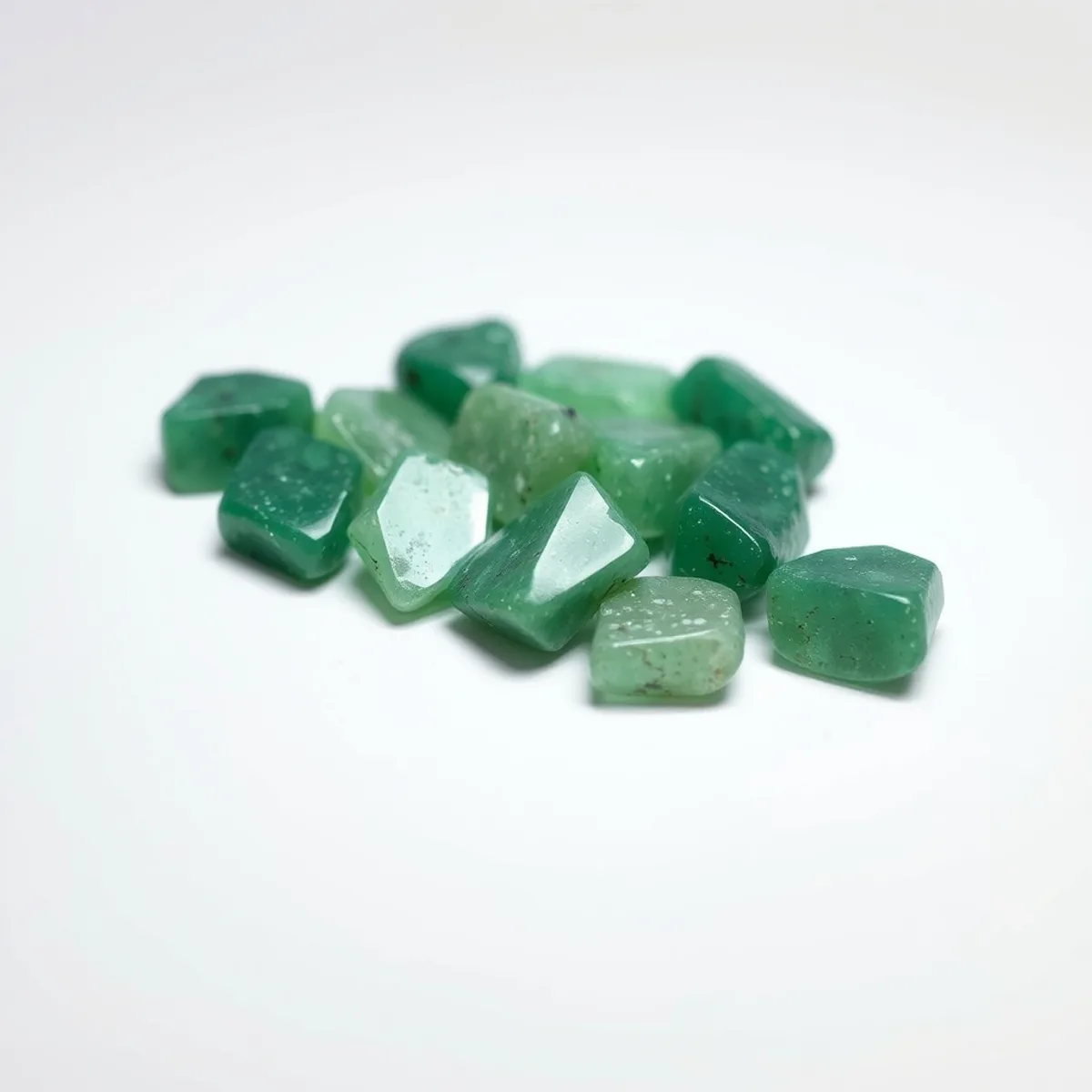
Green Aventurine, the Gentle Lucky Stone
The stone most commonly gifted for new beginnings. Where the sparkle comes from, why it has kept its association with luck for centuries, and why we are cautious about how luck gets marketed.
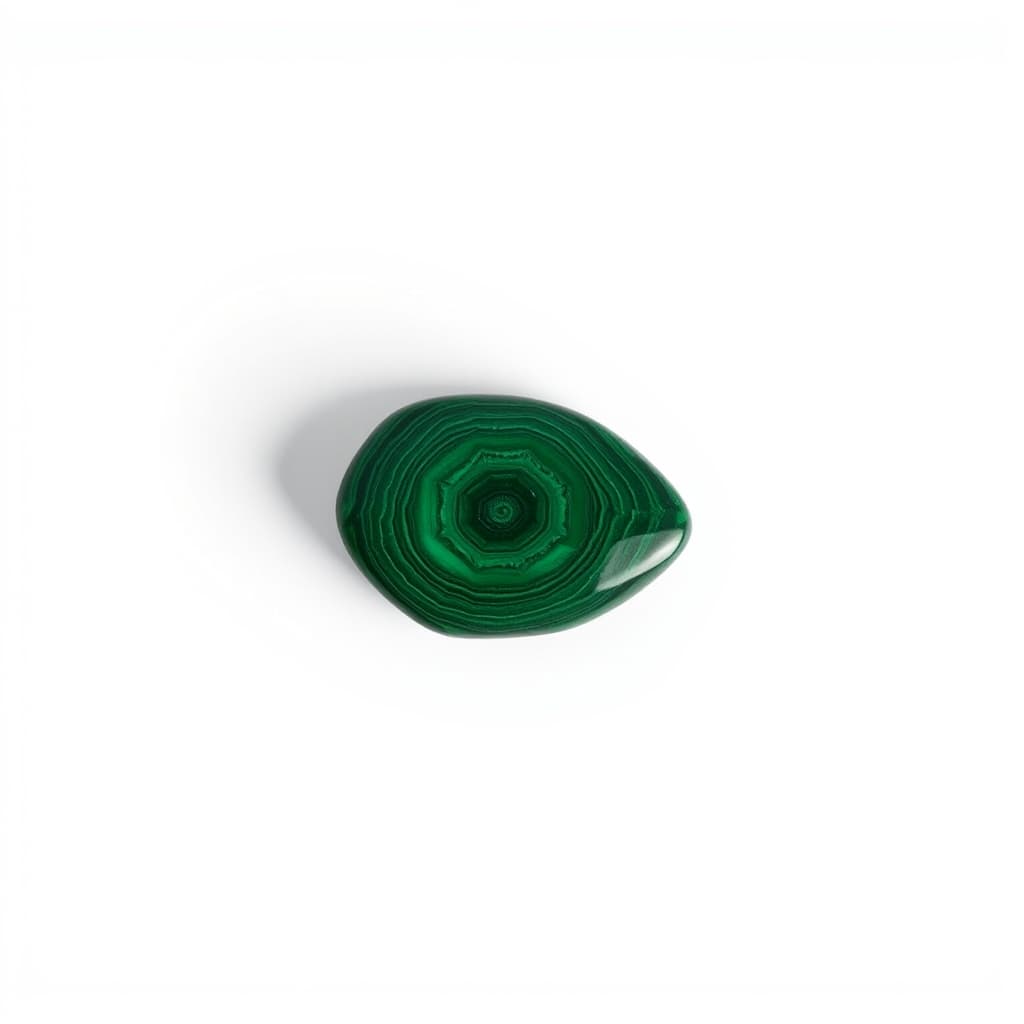
Malachite, the Green That Hides a Warning
Few stones are as striking as a polished malachite, and few crystals require as much honest handling. Where it comes from, why the dust is toxic, and how to live with one of the most beautiful and demanding stones in the mineral world.
Mentioned in
Sit with us on Sundays.
One quiet letter every week. New writing, a crystal to consider, and whatever we have been thinking about. No tracking pixels, no affiliate noise.
By subscribing you agree to receive weekly emails from AU Crystals. Unsubscribe anytime. See our privacy note.